

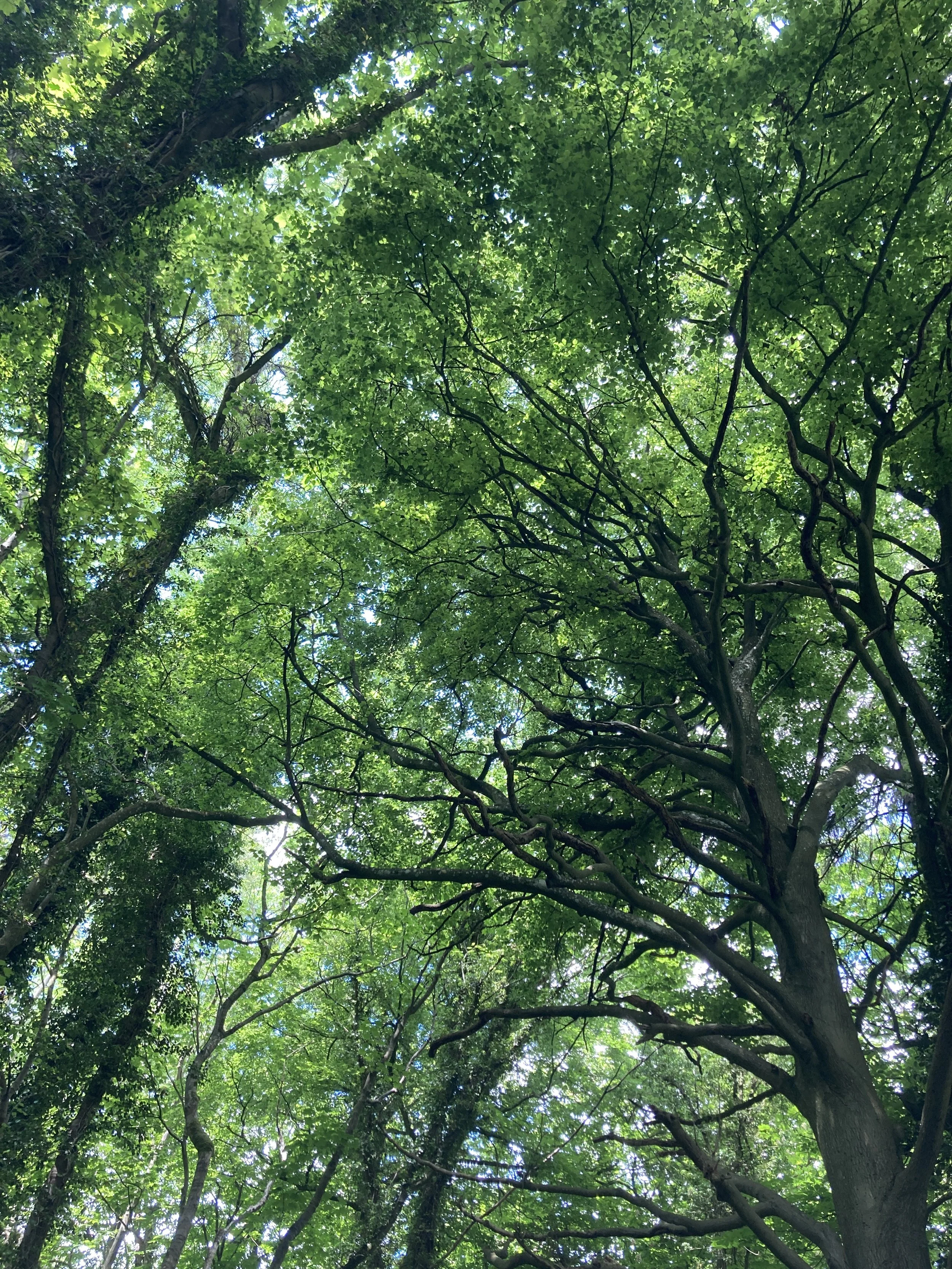
If you go down to the woods today… A guide to forest bathing.
Forest bathing has a huge positive impact on our health and wellbeing.
The science behind forest bathing
Forest bathing or ‘shinrin-yoku’ was first developed in Japan in the 1980s, following scientific studies conducted by the government. The results showed that two hours of mindful exploration in a forest could reduce blood pressure, lower levels of the stress hormone cortisol and improve concentration and memory.
They also found that trees release chemicals called phytoncides, which have a protective antimicrobial effect on human bodies and thereby boost the immune system. As a result of this research, the Japanese government introduced ‘shinrin-yoku’ as a national health programme.
Top tips for forest bathing
Forest bathing is no more complicated than simply going for a wander in your local woods or park. The only difference is that rather than walking for exercise, you take the time to really focus on the natural world around you, from the rays of sunlight catching the leaves to birdsong echoing from the canopy. Here are some tips to get you started.
Pick a quieter time of day: there will probably be fewer people around if you go to the woods in the early morning or later in the evening. Depending on your schedule you could also try weekday afternoons (outside of the school holidays).
Turn off your electronic devices: an hour or two of digital detoxing will help you to slow down and focus on your surroundings.
Take your time: wandering slowly through the trees can be very meditative, or you can settle down on a log to really take in your surroundings. If you stay still and quiet enough you’re also more likely to see wildlife, such as deer and birds.
Use all of your senses: when did you last touch a tree trunk and feel the rough bark, or notice the way sunlight catches the leaves, or try to pick out all the different types of birdsong around you?
Pay attention to your breathing: this is a great way to relax and clear your mind so you can focus on what’s around you. Try closing your eyes and taking 10 slow, deep breaths in and out, then gently open your eyes and bring your awareness back to the forest.
Stay as long as you feel comfortable: two hours is the recommended time for a forest bathing session, but if you’ve got a busy schedule then even just 10 minutes in nature can help you to feel refreshed.
How woodland sounds can boost your wellbeing
The rustle of wind through the trees, birdsong drifting through the air, and the gentle trickle of a woodland stream do more than create a soothing soundtrack—they can have a profound effect on our health and wellbeing. Whether the connection is forged in a wild natural landscape or within a cherished urban green space, growing research highlights the powerful relationship between place and wellbeing. Meaningful connections to the environments around us can evoke positive emotions, reduce stress, and support a range of physiological benefits, reinforcing the important role that both nature and place play in our everyday health.