


What is Gua Sha? - A guide to why and how it’s used.
What is Gua Sha?
Gua sha is a traditional East Asian therapy where a smooth-edged tool is used to scrape the skin. It is used to relieve chronic muscle pain, reduce inflammation, and improve blood circulation. In cosmetic routines, it is widely used to promote lymphatic drainage, sculpt the face, and reduce puffiness. It’s one of the techniques that I incorporate within my treatments and I love to see the instant results it brings to the face. After a deep sculpting facial massage that generates heat, increases blood flow to the muscles and fascia, using an ice cold pair of rose quartz qua sha tools provides additional benefits to my facials.
Reduces Puffiness: By stimulating your lymphatic system, a gua sha tool helps flush out stagnant fluids and toxins that accumulate overnight, particularly under the eyes and along the jawline.
Contours and Lifts: The gentle scraping motions help sculpt the face by breaking up tension in the muscles, giving the temporary appearance of sharper cheekbones and a more defined jaw.
Boosts Circulation: The massage motion increases blood flow to the skin, bringing fresh oxygen and nutrients which can result in a brighter, healthier complexion.
Relieves Muscle Tension: Holding stress in your face often leads to tightened muscles. Using a gua sha on your forehead, temples, and jaw can relieve tension and may even help alleviate headaches or TMJ pain.
Aids Product Absorption: When paired with a facial oil or serum, the tool helps massage the product deeper into your skin without stretching or pulling the delicate skin.
How to use a Gua Sha at home safely:
Always use slip: Never use a gua sha on dry skin. Apply a generous amount of Facial Oil to create a slick surface and prevent friction.
Angle correctly: Keep the stone almost completely flat against your face (at about a 15 to 30-degree angle), rather than digging the sharp edge into your skin.
Use light pressure: Facial skin is delicate. Use light to medium, sweeping strokes upward and outward toward your hairline to drain fluid effectively.
When to avoid it:
While it is generally a safe and relaxing ritual, you should skip facial gua sha if you have active acne, open wounds, sunburned skin, or flare-ups from conditions like eczema or rosacea. You should also avoid it if you recently had cosmetic procedures like Botox or dermal fillers.
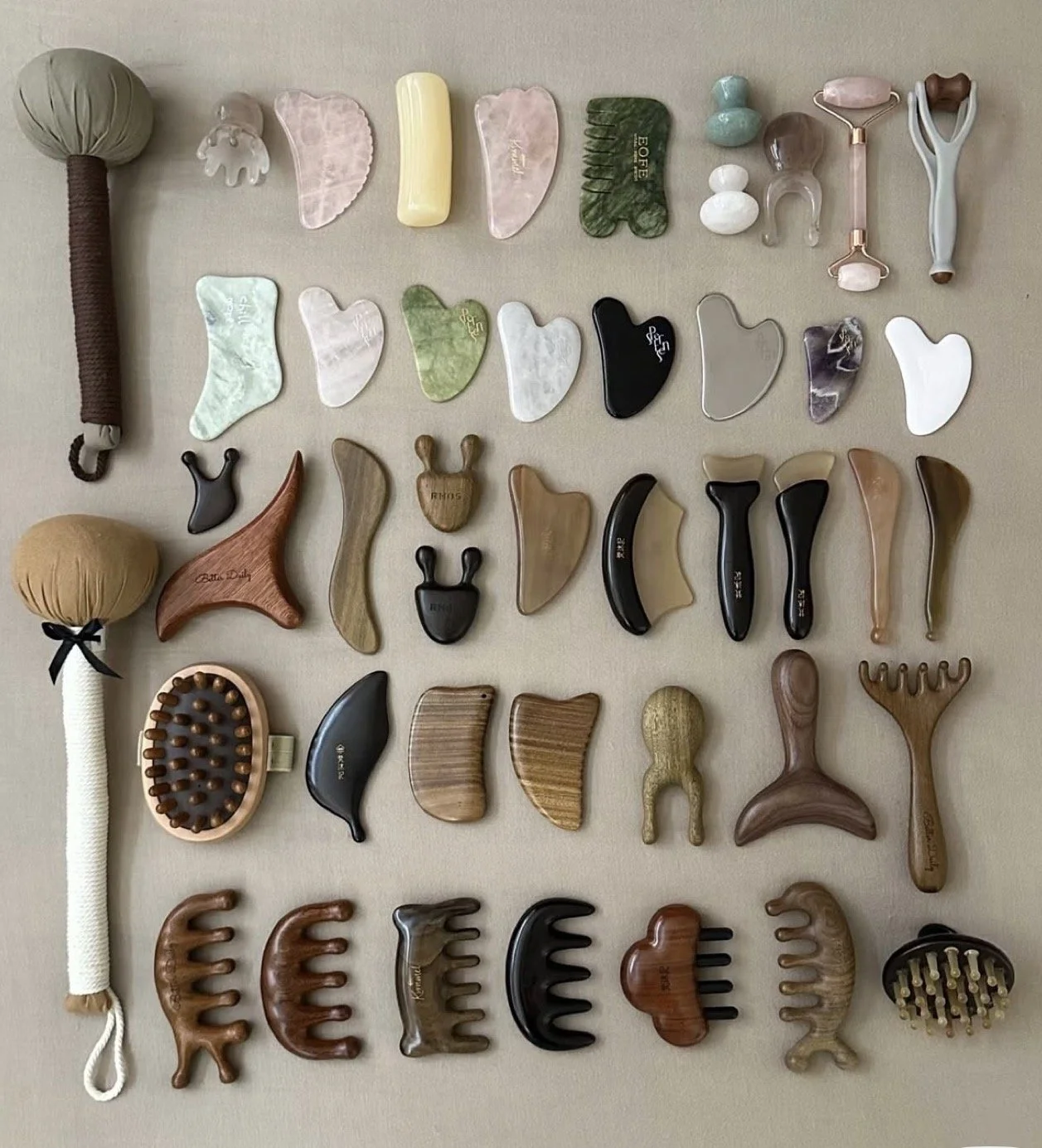
Gua Sha tools are categorized by shape and material. The heart or v-notch shape is ideal for contouring the jawline and cheekbones. Comb shapes target the scalp, while flat or spoon tools manage full-body lymphatic drainage. Materials like jade or rose quartz are naturally cooling, while stainless steel offers durability and heat retention.
Shapes
Heart or V-Shaped: The universal choice for facial care. It features a notched edge that perfectly hugs the jawline, chin, and brow bone.
Comb: Features dull, rounded teeth designed for scalp massage, releasing tension, and boosting hair follicle circulation.
Spoon or Teardrop: Long, curved shapes great for neck contouring, sinus relief, and full-body massages.
Wave or Multi-Edge: Features a variety of curves, notches, and points to target deep muscle relief, tight necks, and hard-to-reach areas like the temples.
Materials
Jade: The most traditional stone. It is dense and retains a naturally cool temperature, making it highly effective for de-puffing and soothing inflammation.
Rose Quartz: Known for its smooth, cooling texture, this crystal is softer than jade and is often preferred for a gentler, surface-level facial massage.
Stainless Steel: Durable, highly hygienic, and non-porous. It can be easily sanitized and holds both hot and cold temperatures remarkably well.
Bian Stone: An ancient, mineral-rich stone known for its slightly grippy texture and unique thermal properties, often used in deeper tissue treatments.

If you go down to the woods today… A guide to forest bathing.
Forest bathing has a huge positive impact on our health and wellbeing.
The science behind forest bathing
Forest bathing or ‘shinrin-yoku’ was first developed in Japan in the 1980s, following scientific studies conducted by the government. The results showed that two hours of mindful exploration in a forest could reduce blood pressure, lower levels of the stress hormone cortisol and improve concentration and memory.
They also found that trees release chemicals called phytoncides, which have a protective antimicrobial effect on human bodies and thereby boost the immune system. As a result of this research, the Japanese government introduced ‘shinrin-yoku’ as a national health programme.
Top tips for forest bathing
Forest bathing is no more complicated than simply going for a wander in your local woods or park. The only difference is that rather than walking for exercise, you take the time to really focus on the natural world around you, from the rays of sunlight catching the leaves to birdsong echoing from the canopy. Here are some tips to get you started.
Pick a quieter time of day: there will probably be fewer people around if you go to the woods in the early morning or later in the evening. Depending on your schedule you could also try weekday afternoons (outside of the school holidays).
Turn off your electronic devices: an hour or two of digital detoxing will help you to slow down and focus on your surroundings.
Take your time: wandering slowly through the trees can be very meditative, or you can settle down on a log to really take in your surroundings. If you stay still and quiet enough you’re also more likely to see wildlife, such as deer and birds.
Use all of your senses: when did you last touch a tree trunk and feel the rough bark, or notice the way sunlight catches the leaves, or try to pick out all the different types of birdsong around you?
Pay attention to your breathing: this is a great way to relax and clear your mind so you can focus on what’s around you. Try closing your eyes and taking 10 slow, deep breaths in and out, then gently open your eyes and bring your awareness back to the forest.
Stay as long as you feel comfortable: two hours is the recommended time for a forest bathing session, but if you’ve got a busy schedule then even just 10 minutes in nature can help you to feel refreshed.
How woodland sounds can boost your wellbeing
The rustle of wind through the trees, birdsong drifting through the air, and the gentle trickle of a woodland stream do more than create a soothing soundtrack—they can have a profound effect on our health and wellbeing. Whether the connection is forged in a wild natural landscape or within a cherished urban green space, growing research highlights the powerful relationship between place and wellbeing. Meaningful connections to the environments around us can evoke positive emotions, reduce stress, and support a range of physiological benefits, reinforcing the important role that both nature and place play in our everyday health.

What happens in a sculpting facial?
A sculpting facial is less a traditional facial and more a deep workout for the face — a hands-on treatment designed to awaken the underlying architecture of the skin. Using a combination of rhythmic massage, lymphatic drainage, intraoral buccal techniques, and targeted lifting movements, the facialist works not only on the surface of the skin but through the fascia — the delicate web of connective tissue that envelops and supports the facial muscles.
When fascia becomes tight, dehydrated, or stagnant, it can contribute to puffiness, tension, and a heavier, less defined appearance. Sculpting massage helps release these adhesions, encouraging circulation, oxygenation, and fluid movement throughout the tissues. At a muscular level, the treatment stimulates underused muscles while softening chronically contracted ones — particularly around the jaw, brow, and cheekbones — creating a naturally lifted, more symmetrical look. The immediate effect is often a sharper contour, heightened glow, and reduced swelling, while over time the face appears more toned, supple, and rested, as though tension has been unwound from within.
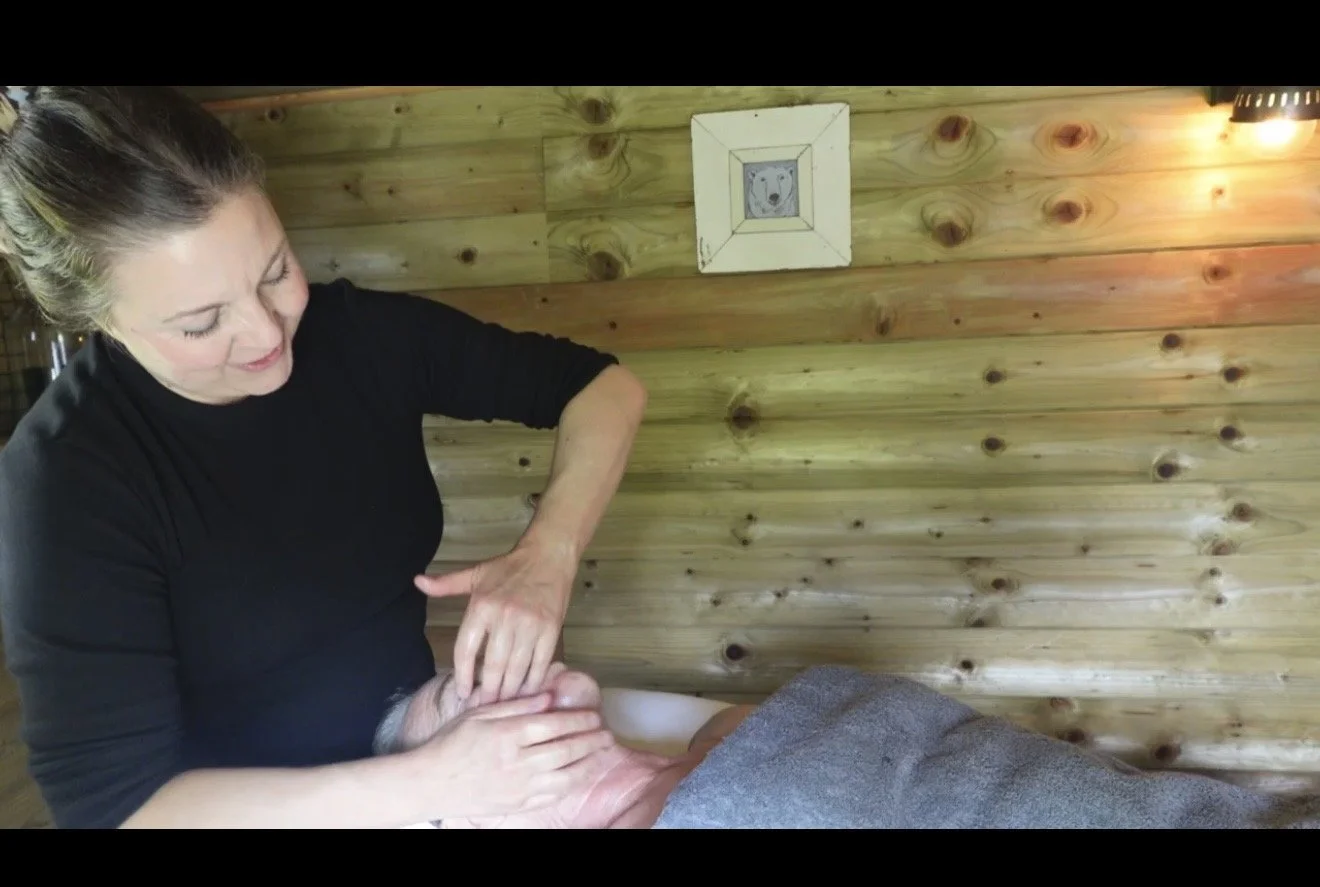
Sculpting Facial in the Botanical Woodshed
Get in contact via the link below to book.

Borage seed oil - what does it bring to our facial oil?
When it comes to achieving healthy, radiant skin, nature has provided us with a remarkable ally; Borage (also known as Starflower). Derived from the seeds of the Borage plant, this natural ingredient holds a wealth of benefits for our skin. Let’s dive into the science behind Starflower, particularly its key component - Borage Seed oil - and how it nourishes and hydrates our skin and why we chose to use it when first formulating The Facial Oil.
Borage oil is naturally rich in Gamma-linolenic acid (GLA), a Vital Omega-6 fatty acid that plays a crucial role in maintaining healthy skin cell walls. Our skin cells rely on GLA to retain moisture effectively, preventing dryness and itching. However our bodies do not produce GLA naturally, making it essential to obtain it through external sources like Borage.
Penetrating the skin
One of the stand out qualities of Borage seed oil is its ability to penetrate the skin deeply. Unlike some other moisturising agents that merely sit on the skin’s surface, Borage Seed oil works its way into the skin, delivering its nourishing benefits directly to the skin cells. This deep penetration ensures that the skin receives maximium benefit of GLA enabling it to stay moisturised, supple and healthy.
Key skin benefits
Intense hydration and barrier repair: Skin barrier strengthening, prevents moisture loss, ideal for extremely dry and sensitive skins.
Anti-inflammatory and calming: Soothes redness and irritation associated with inflammatory skin conditions such as eczema, dermatitis and rosacea.
Anti-Aging and Elasticity - Nourishes skin to improve suppleness and elasticity, helping to reduce the appearance of wrinkles and promoting cell regeneration.
Lightweight absorption - Despite its intense moisturising properties, its fast absorbing and won’t clog pores.
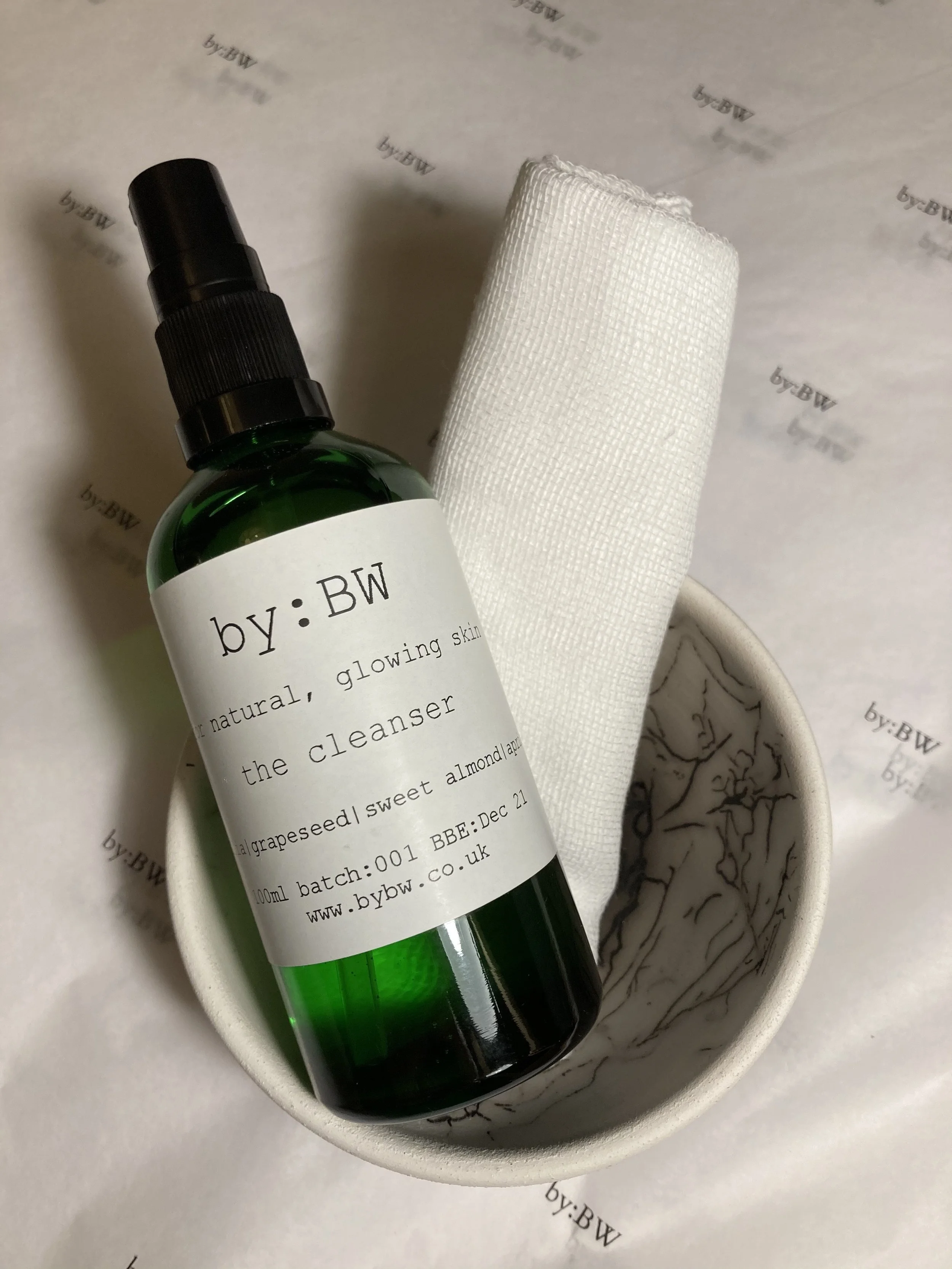
Cleansing with an oil
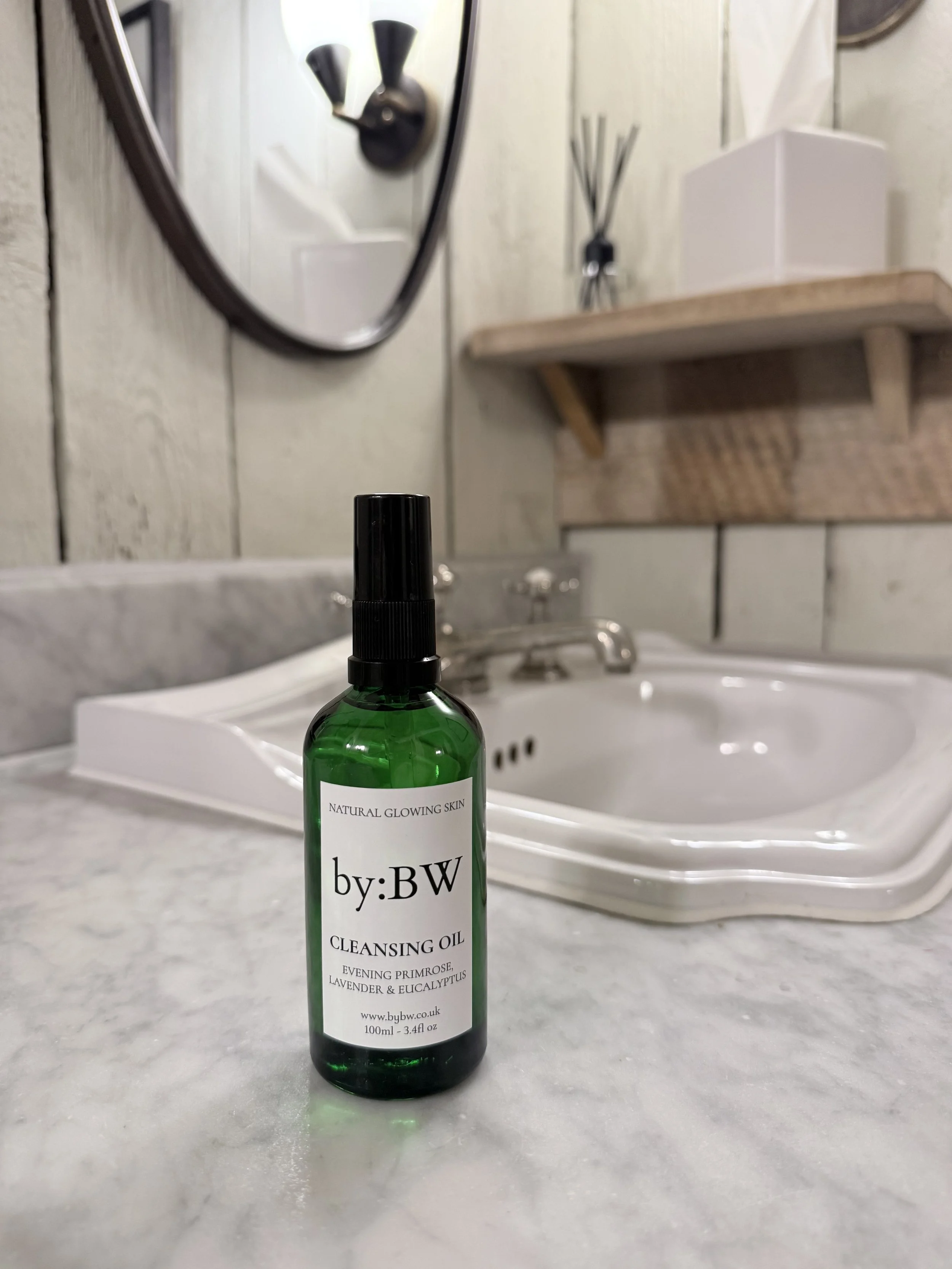
Oil cleansing effectively removes stubborn make up, sebum and sunscreen by using the principle that "like dissolves like," breaking down oil-based impurities without stripping the skin's natural barrier. It balances oil production, hydrates, and deeply cleanses pores, making it suitable for all skin types, including oily and acne-prone skin.
Why Cleanse with Oil?
Deep Cleansing (Without Drying): Oil binds to dirt and excess sebum, lifting them out without the harsh detergents that cause tightness or dry skin.
Effortless Makeup/SPF Removal: It breaks down waterproof mascara, sunscreen, and stubborn makeup better than water-based cleansers, reducing the need for harsh scrubbing.
Balances All Skin Types: It helps normalize sebum production for oily skin and nourishes dry skin, helping to maintain a healthy skin barrier.
Deep Pore Care: The oil-loving (lipophilic) nature allows it to dissolve hardened, gunky sebum inside pores, reducing blackheads.
Nourishment & Protection: Many oils are packed with nutrients, vitamins, and antioxidants that protect the skin and keep it hydrated.
How to Use:
Apply to dry hands and a dry face.
Massage for 60 seconds to break down makeup and pollutants.
Add warm water to emulsify the oil into a milky texture.
Rinse thoroughly; the oil will wash away without leaving a greasy residue.
Our Cleansing Oil is lightweight using grapeseed, sweet almond and evening primrose and is highly effective to use for all skin types.