

What is Gua Sha? - A guide to why and how it’s used.
Gua sha is a traditional East Asian therapy where a smooth-edged tool is used to scrape the skin. It is used to relieve chronic muscle pain, reduce inflammation, and improve blood circulation. In cosmetic routines, it is widely used to promote lymphatic drainage, sculpt the face, and reduce puffiness. It’s one of the techniques that I incorporate within my treatments and I love to see the instant results it brings to the face. After a deep sculpting facial massage that generates heat, increases blood flow to the muscles and fascia, using an ice cold pair of rose quartz qua sha tools provides additional benefits to my facials.
Reduces Puffiness: By stimulating your lymphatic system, a gua sha tool helps flush out stagnant fluids and toxins that accumulate overnight, particularly under the eyes and along the jawline.
Contours and Lifts: The gentle scraping motions help sculpt the face by breaking up tension in the muscles, giving the temporary appearance of sharper cheekbones and a more defined jaw.
Boosts Circulation: The massage motion increases blood flow to the skin, bringing fresh oxygen and nutrients which can result in a brighter, healthier complexion.
Relieves Muscle Tension: Holding stress in your face often leads to tightened muscles. Using a gua sha on your forehead, temples, and jaw can relieve tension and may even help alleviate headaches or TMJ pain.
Aids Product Absorption: When paired with a facial oil or serum, the tool helps massage the product deeper into your skin without stretching or pulling the delicate skin.
How to use a Gua Sha at home safely:
Always use slip: Never use a gua sha on dry skin. Apply a generous amount of Facial Oil to create a slick surface and prevent friction.
Angle correctly: Keep the stone almost completely flat against your face (at about a 15 to 30-degree angle), rather than digging the sharp edge into your skin.
Use light pressure: Facial skin is delicate. Use light to medium, sweeping strokes upward and outward toward your hairline to drain fluid effectively.
When to avoid it:
While it is generally a safe and relaxing ritual, you should skip facial gua sha if you have active acne, open wounds, sunburned skin, or flare-ups from conditions like eczema or rosacea. You should also avoid it if you recently had cosmetic procedures like Botox or dermal fillers.
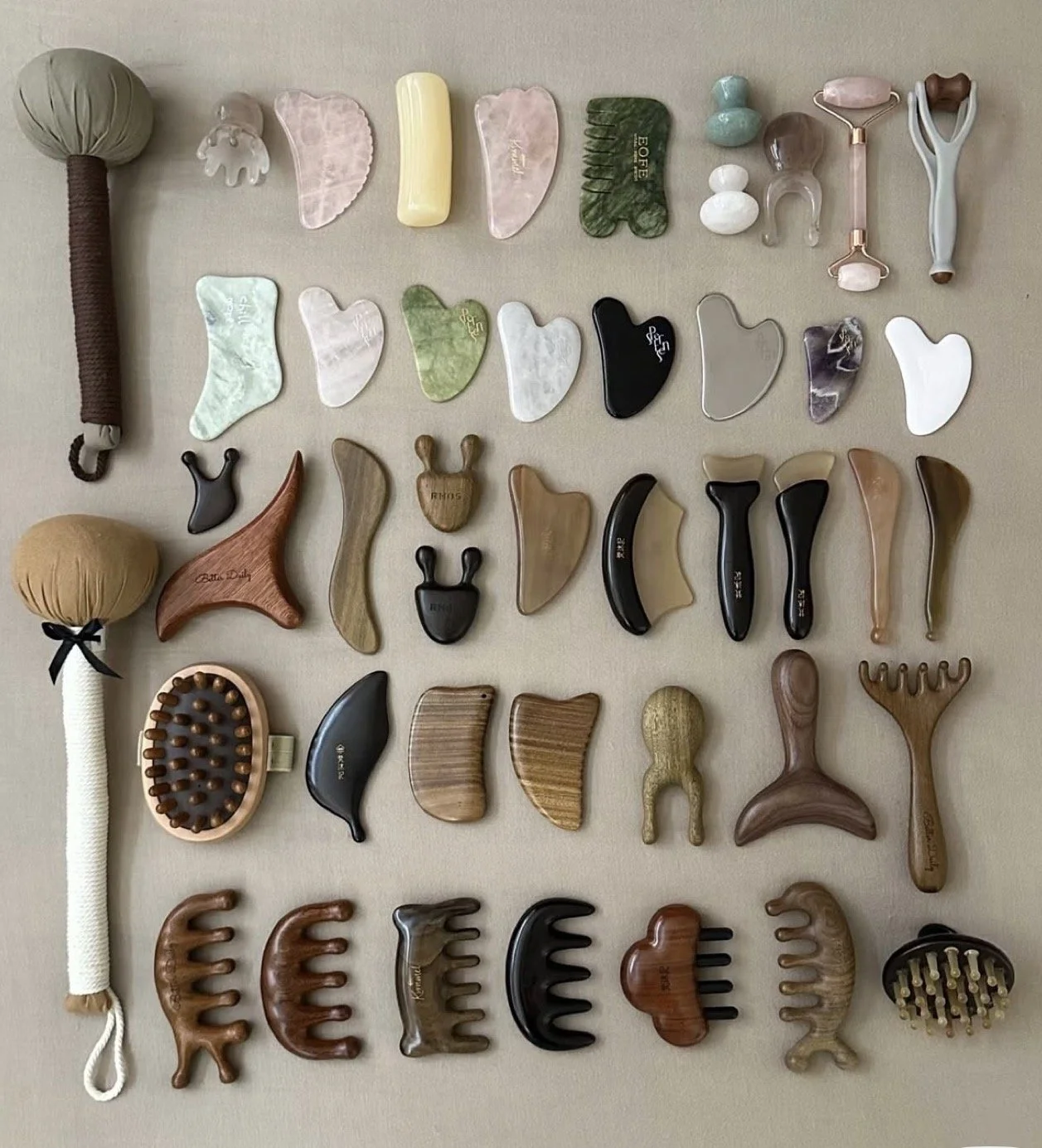
Gua Sha tools are categorized by shape and material. The heart or v-notch shape is ideal for contouring the jawline and cheekbones. Comb shapes target the scalp, while flat or spoon tools manage full-body lymphatic drainage. Materials like jade or rose quartz are naturally cooling, while stainless steel offers durability and heat retention.
Shapes
Heart or V-Shaped: The universal choice for facial care. It features a notched edge that perfectly hugs the jawline, chin, and brow bone.
Comb: Features dull, rounded teeth designed for scalp massage, releasing tension, and boosting hair follicle circulation.
Spoon or Teardrop: Long, curved shapes great for neck contouring, sinus relief, and full-body massages.
Wave or Multi-Edge: Features a variety of curves, notches, and points to target deep muscle relief, tight necks, and hard-to-reach areas like the temples.
Materials
Jade: The most traditional stone. It is dense and retains a naturally cool temperature, making it highly effective for de-puffing and soothing inflammation.
Rose Quartz: Known for its smooth, cooling texture, this crystal is softer than jade and is often preferred for a gentler, surface-level facial massage.
Stainless Steel: Durable, highly hygienic, and non-porous. It can be easily sanitized and holds both hot and cold temperatures remarkably well.
Bian Stone: An ancient, mineral-rich stone known for its slightly grippy texture and unique thermal properties, often used in deeper tissue treatments.